
Introduction
In today’s digital world, we’re constantly surrounded by social media, notifications, and endless entertainment. These activities can be enjoyable but they can also make it harder to concentrate, stay productive, and enjoy simple everyday moments.
The Dopamine Detox concept has become increasingly popular in recent time. Many people believe that taking a break from highly stimulating activities can “reset” the brain, improve focus, boost motivation, and helps in reduction of screen addiction. But is that really how dopamine works?
The truth is that dopamine detox is often misunderstood. Although the name suggests that you can remove or reset dopamine levels, but science tells a different story. The real benefits come from reducing distractions, becoming more mindful how we should spend our time and breaking unhealthy habits.
In this blog, we’ll explore what dopamine detox is , how it works, and whether science supports it.
1. What Is Dopamine?
Dopamine is a neurotransmitter (a chemical messenger in the brain). It plays a vital role in how we think, feel, learn, and behave. It is also called “feel-good chemical,”. Its primary job is to not make us feel pleasure but to motivate us to seek rewards and repeat behaviors which our brain considers beneficial.
2. What Is a Dopamine Detox?
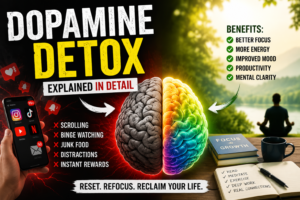
Dopamine Detox is the practice of taking a temporary break from stimulating activities. The idea is to reduce the dependence on highly rewarding activities- such as endlessly scrolling from social media, binge-watching tv shows, playing video games for hours-so you can regain focus and become more mindful with your time. Junk food and excessive online shopping also included in these activities.
3. Why Has Dopamine Detox Become So Popular?
Due to rapid change in technology the dependency on technology also shifted rapidly and due to this the smartphone addiction also increases with increase in screen time, difficulty focusing on work or studies, constant craving for entertainment, growing awareness of digital wellness and mental health.
To change these habits many started looking for ways to reduce distractions, improve concentration, and regain control over their daily habits. This growing interest has made dopamine detox one of the most talked-about productivity trends.
4. Does Dopamine Detox Really Work?
Many people think that a dopamine detox “resets” the brain by lowering the dopamine levels or stopping dopamine production. It does work but not in the way many people think. As dopamine is a natural and essential neurotransmitter that your brain continuously produces. You can not permanently reduce dopamine simply by avoiding enjoyable activities for a day or two.
The real benefit comes from reducing distractions and breaking unhealthy habits. Taking a break from overstimulating activities can make it easier to focus on meaningful tasks.
5. What Does Science Say?
There is no scientific evidence that you can “reset” dopamine by avoiding enjoyable activities but research supports that limiting excessive use of digital stimulation can help in better concentration, reduce compulsive phone use, encourage heathy routines, improve productivity and well-being.
6. Benefits of Reducing Overstimulation
Before explaining the benefits let me explain what does stimulation means excitement of doing something(different types of activity or other things in which they are interest or they just like to do it), example: social media, video games etc.
Reducing Overstimulation helps in better concentration, more mindful use of technology, better sleep quality, improve emotional balance (mental health), more time for hobbies, exercise, and relationships.
7. Common Myths About Dopamine Detox
- Myth 1: It removes dopamine from your brain.
- Myth 2: You should avoid all enjoyable activities.
- Myth 3: One Detox session will completely change your life.
- Myth 4: Dopamine is bad for you.
8. How to Practice a Healthy Dopamine Detox
Set daily screen-time limits, turn off unnecessary notifications, schedule phone-free hours, spend time outdoors, read books or journals, exercise regularly, practice meditation or mindfulness, and prioritize quality sleep.
Conclusion
The idea of dopamine detox has gained popularity because many of us feel overwhelmed by constant digital stimulation. While the name is misleading, the core idea-reducing distractions and becoming more intentional about how you spend your time-can be beneficial. Rather than chasing a “dopamine reset”, focus on building sustainable habits that support your mental well-being, productivity, and long-term happiness.
